
01Course description
The objective. The work. The standard.
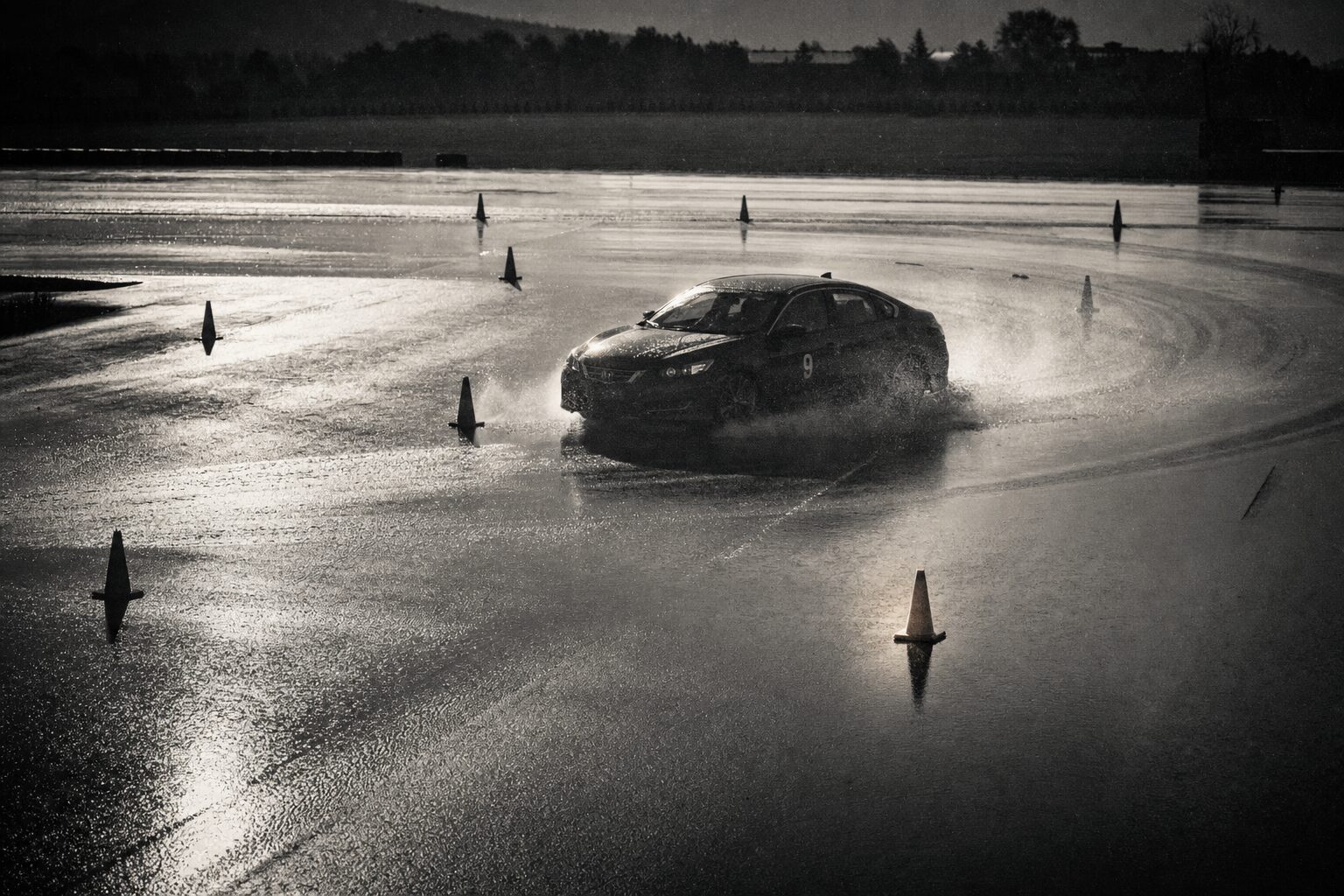
Car Control II moves the driver into an all-wheel-drive platform and beyond single-event exercises. Additional traction creates more acceleration and recovery options, but it can also conceal excess entry speed, an overloaded front axle, or impatient throttle until the available margin is already gone.
Students coordinate braking, brake release, steering, and throttle while the vehicle transitions from one state to another. The work becomes less about correcting one slide and more about preventing one input from compromising the next.
Students learn to manage transient balance through linked maneuvers, changing radii, and increasing workload. Consistency remains the measure: the driver must understand what caused the vehicle’s response and reproduce the correct technique intentionally.
- AWD systems and torque-distribution awareness
- Brake-release timing
- Combined braking and steering
- Corner-entry balance
- AWD traction and throttle effects on chassis balance
- Multi-axis weight transfer
- Power-on understeer and yaw management
- Transient understeer management
- Transient oversteer management
- Direction changes and transitions
- Slalom precision
- Changing-grip adaptation
- Recovery choice and repeatability